

Strategy
Insight: 4 lessons on replatforming.
Copying an old platform to a new environment is a costly pitfall. Discover 4 lessons from 20 years of experience to make your transformation succeed.

Over the past few weeks, I have shared a series of 4 out of 8 lessons from my career of more than 20 years. Each with a lesson you can use to keep your digital transformation moving.
Lesson #1 - Rebuilding is impossible
A frequently heard request: “The new platform must contain everything it contains today - we will improve it later.”
The current platform is usually the result of years of iteration, exceptions, and undocumented decisions. Rebuilding one-to-one sounds safe, but it often means recreating complexity, technical debt - and missed opportunities. And the truth? That ‘later’ rarely comes - and the costs of copying the past are enormously high.
Lessons I have learned:
- What is live today is rarely fully understood - or fully documented.
- Copying the old means continuing with what no longer works.
- You don’t have to rebuild everything, only what adds value.
- If you start with a clean MVP, you can move forward, not backward.
Lesson #2 - Oops, everything is a must-have! (make choices)
The replatforming project is finally here! Time to fix EVERYTHING. You start gathering requirements, but the finish line keeps moving. No one wants to compromise. Every feature is a must-have…
Lessons I have learned:
- Make difficult choices. Dare to say no.
- One person’s “nice-to-have” is another person’s “must-have” - seek alignment with each other early in the process.
- Pay close attention to the discovery phase, don’t just focus on implementation.
- Unclear requirements lead to waste, because the sprint train keeps moving.
Lesson #3 - Change requires different skills than daily operations
Keeping daily operations running is not the same as transforming them. I have seen strong teams underestimate how much focus and time change requires. A lack of this is why transformation often stalls. Companies are good at running their business, but leading change is a completely different skill.
Lessons I have learned:
- Your digital transformation needs its own pace, team, and way of thinking.
- Most organizations do not have the capacity and ability to carry out major changes alone.
- Fully understanding the new technology is essential to implementing it successfully.
- Change is temporary, but the impact is lasting. Make sure it counts.
- Enlist the help of people who have done it before.
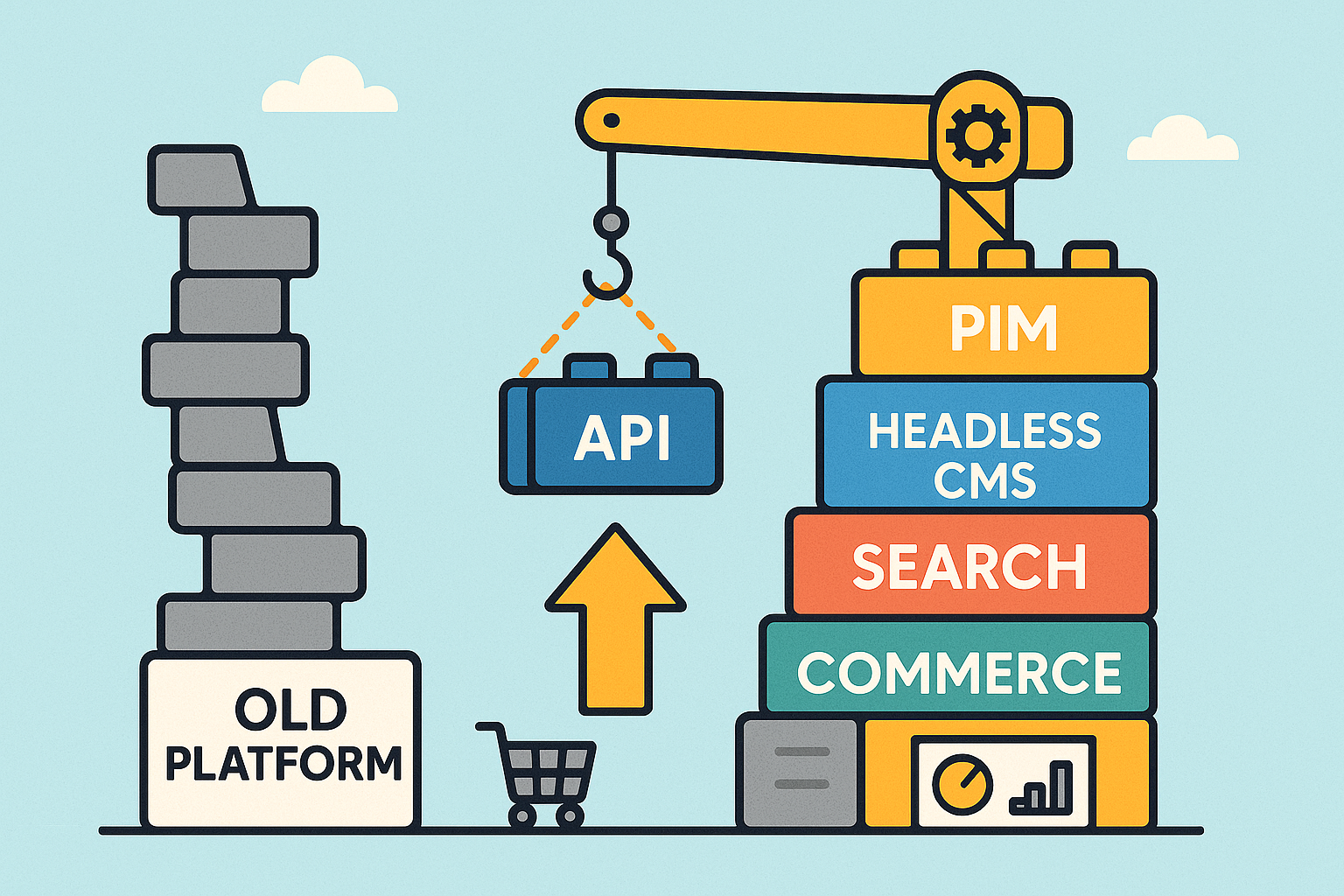
Lesson #4 - Composable doesn’t mean replacing everything with SaaS
Headless, API-first, MACH - it’s the new standard. But one pattern keeps repeating: brands try to become composable everywhere at once. Trading a monolith for five SaaS tools sounds modular, but it can blow up your project, budget, and timelines. Not everything needs to be replaced at once.
Lessons I have learned:
- You don’t have to be fully composable on day one.
- Start with what is actually broken - and keep what works.
- The frontend often benefits most from speed and flexibility; start there without replacing a host of back-end systems.
- Targeted change delivers more value than full disruption.
Tags
About the author
Michiel Tielemans
Digital Transformation Lead
20+ years of experience in digital transformation at major brands and government organizations. Michiel shares practical lessons you can apply immediately.
Want to know more?
Doubting between headless, composable, or a DXP? Schedule a free sparring session. In 60 minutes, we’ll determine together whether your challenge lies in software or organization.